Manitaire
Manitaire
Manitaire
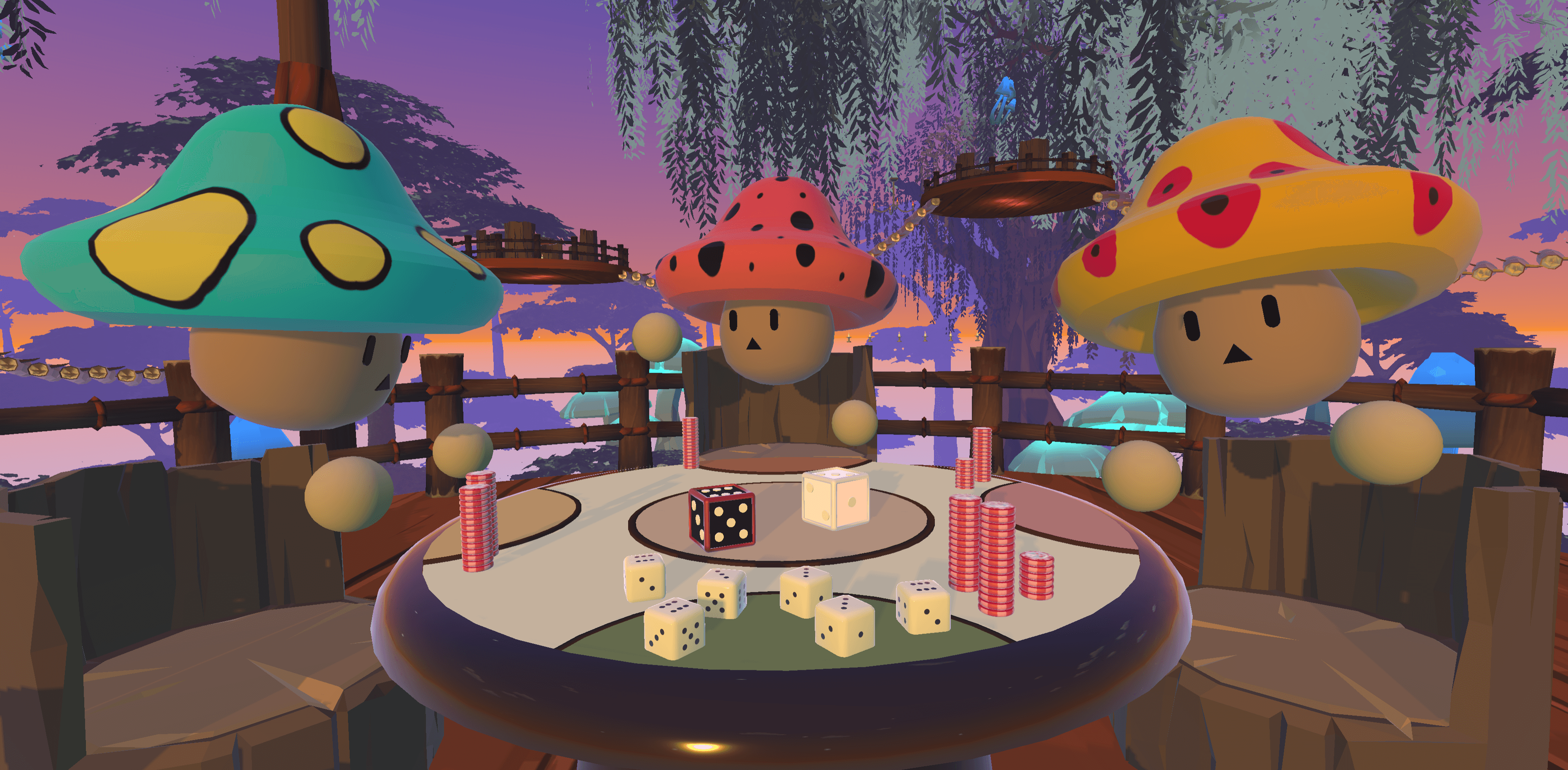
Somewhere deep in a magical forest, lies a bar where mushroom people gather for a game of Manitaire
Somewhere deep in a magical forest, lies a bar where mushroom people gather for a game of Manitaire
Somewhere deep in a magical forest, lies a bar where mushroom people gather for a game of Manitaire
Category:
Category:
Category:
Multiplayer
Multiplayer
Multiplayer
Made in:
Made in:
Made in:
Unity 6
Unity 6
Unity 6
Start: September 2025
Start: September 2025
Start: September 2025
Duration:
Duration:
30 Weeks
30 Weeks
Duration:
30 Weeks
About
About
About
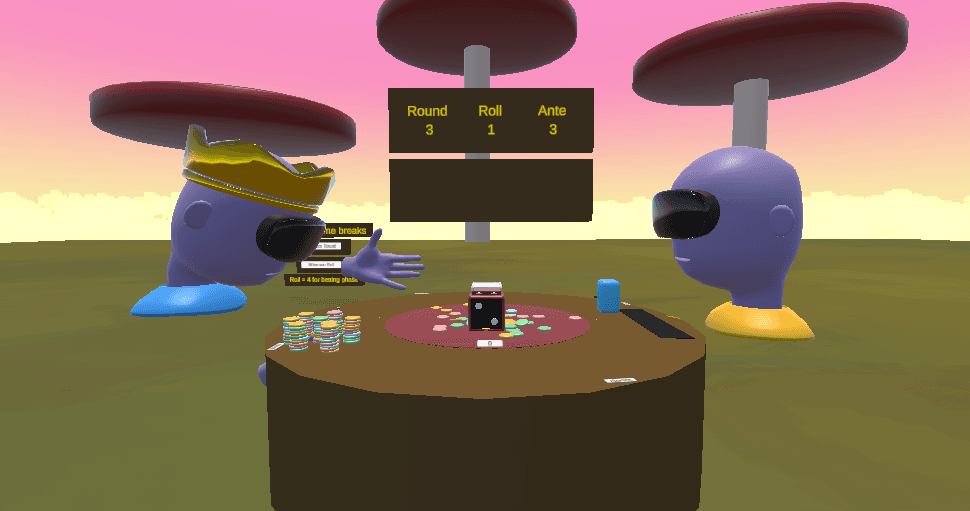
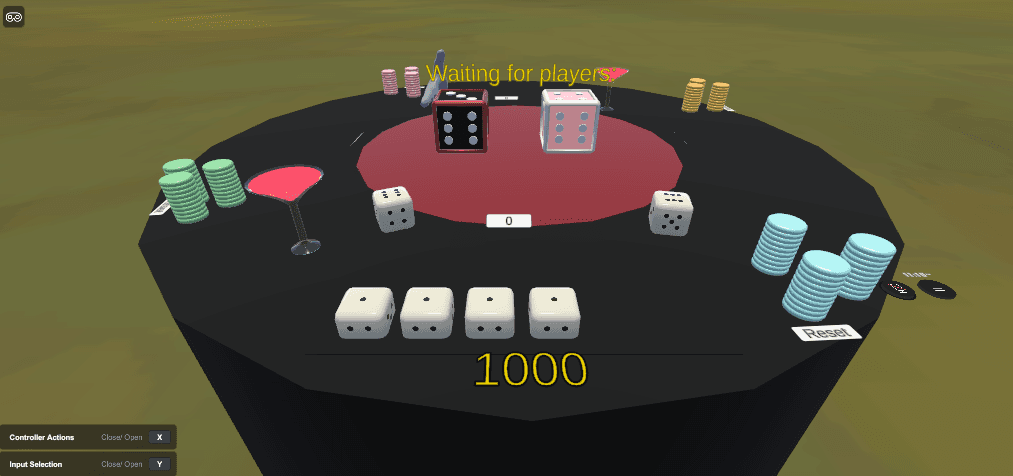
Manitaire is a dice-poker-based game to play with your friends!
You are an Enoki, a sentient mushroom betting your life savings in a game of bluff.
Roll the dice to build combos, then bet against your friends on who's got the best combo.
The winner takes it all!
Manitaire is a dice-poker-based game to play with your friends!
You are an Enoki, a sentient mushroom betting your life savings in a game of bluff.
Roll the dice to build combos, then bet against your friends on who’s got the best combo.
The winner takes it all!

Technical Features
Technical Features
Technical Features
As the lead developer, my goal was to make a fun, functional, and intuitive game filled with animations and effects where you can spend time with your friends.
This was my first online multiplayer project and it imposed a huge challenge, but at the end it was all worth it.
Here are some of those challenges:
As the lead developer, my goal was to make a fun, functional, and intuitive game filled with animations and effects where you can spend time with your friends.
This was my first online multiplayer project and it imposed a huge challenge, but at the end it was all worth it.
Here are some of those challenges:
Networked Objects
Networked Objects
Networked Objects
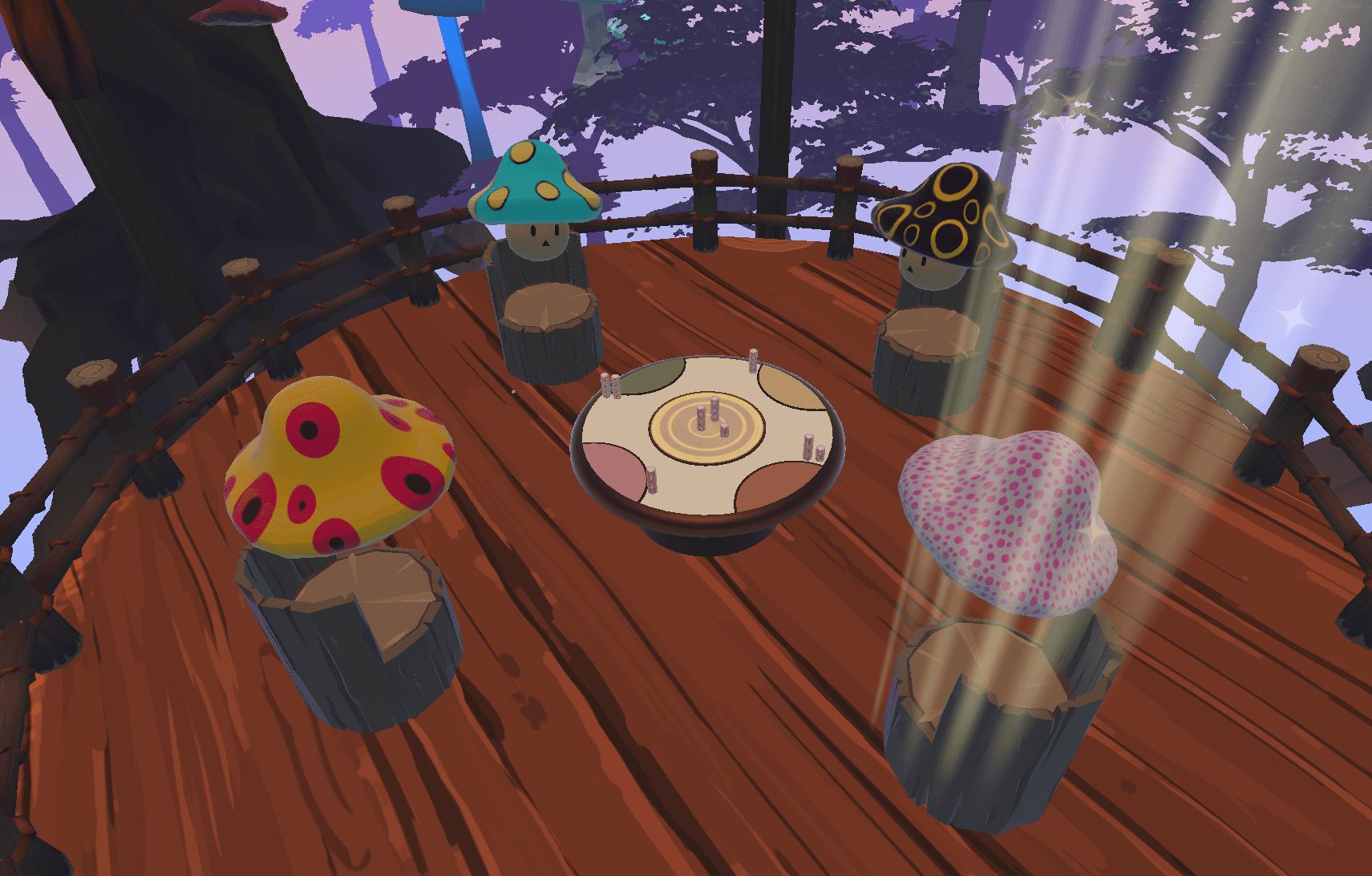
The first step was to get an understanding of server-authoritative logic and how gameplay is synchronized across players.
I was able to implement networked dice, casino chips, and even the player avatars themselves.
Small object synchronization was very tricky, as players would not be getting the same dice values. That's where animation came in handy! I made a system that would randomly choose dice values and animate the result.
The first step was to get an understanding of server-authoritative logic and how gameplay is synchronized across players.
I was able to implement networked dice, casino chips, and even the player avatars themselves.
Small object synchronization was very tricky, as players would not be getting the same dice values. That’s where animation came in handy! I made a system that would randomly choose dice values and animate the result.
The first step was to get an understanding of server-authoritative logic and how gameplay is synchronized across players.
I was able to implement networked dice, casino chips, and even the player avatars themselves.
Small object synchronization was very tricky, as players would not be getting the same dice values. That’s where animation came in handy! I made a system that would randomly choose dice values and animate the result.
Game Flow
Game Flow
Game Flow
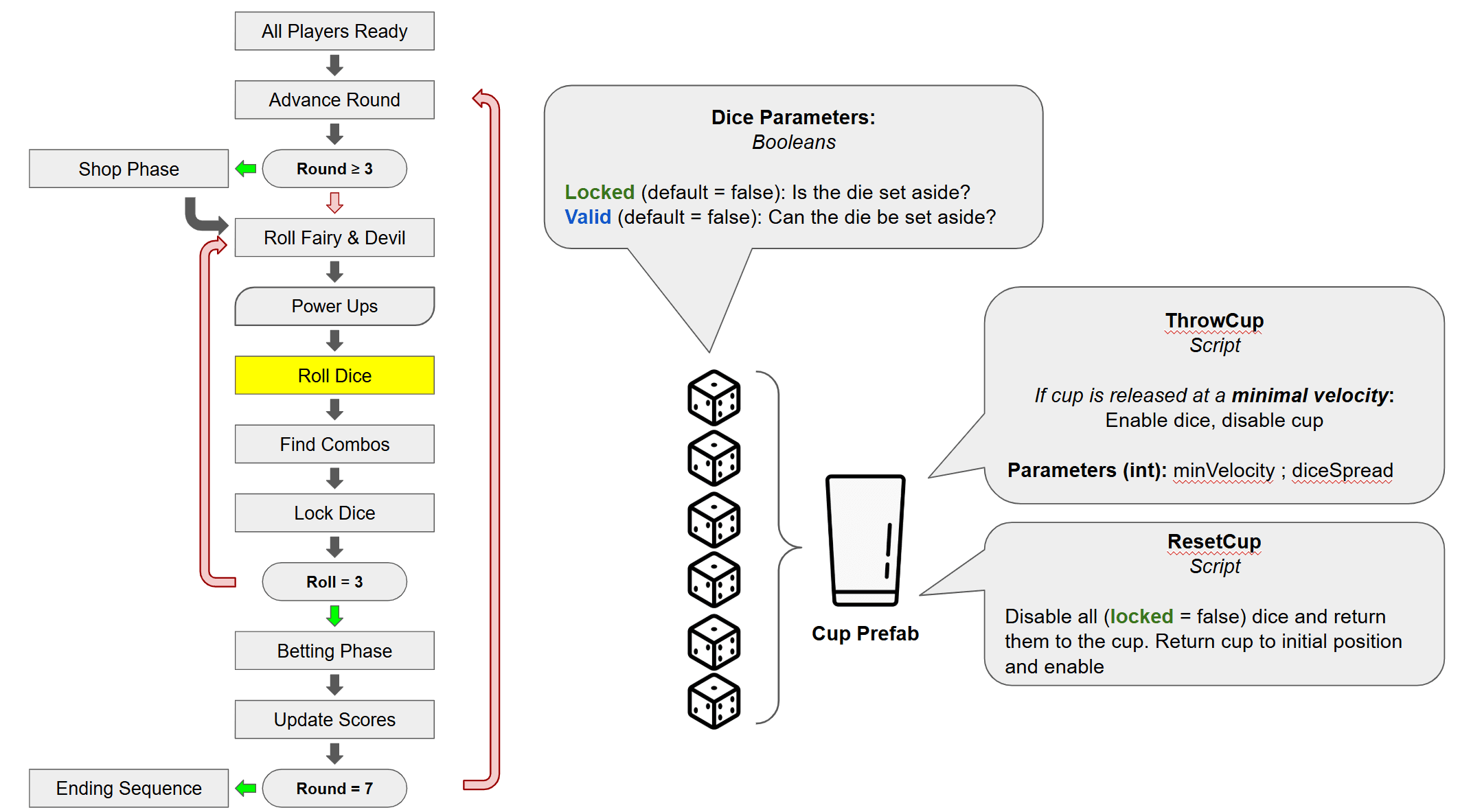
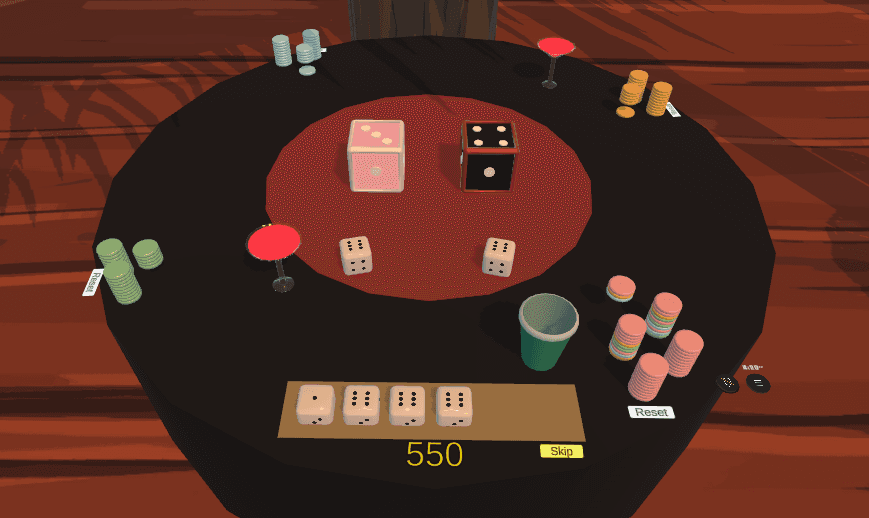
To achieve a modular system, the base structure of the game was made and remade multiple times until reaching perfection. This meant going back to pen and paper and starting from scratch in more than one occasion. The result was a simple and solid base for the game's progression.
Each round is split in two phases: A preparation phase where players roll their dice and gain score,
and a betting phase where players throw their chips into the pot, which are then evaluated to make sure bets are fair before declaring a winner.
To achieve a modular system, the base structure of the game was made and remade multiple times until reaching perfection. This meant going back to pen and paper and starting from scratch in more than one occasion. The result was a simple and solid base for the game’s progression.
Each round is split in two phases: A preparation phase where players roll their dice and gain score,
and a betting phase where players throw their chips into the pot, which are then evaluated to make sure bets are fair before declaring a winner.
To achieve a modular system, the base structure of the game was made and remade multiple times until reaching perfection. This meant going back to pen and paper and starting from scratch in more than one occasion. The result was a simple and solid base for the game’s progression.
Each round is split in two phases: A preparation phase where players roll their dice and gain score,
and a betting phase where players throw their chips into the pot, which are then evaluated to make sure bets are fair before declaring a winner.
Currency System
Currency System
Currency System
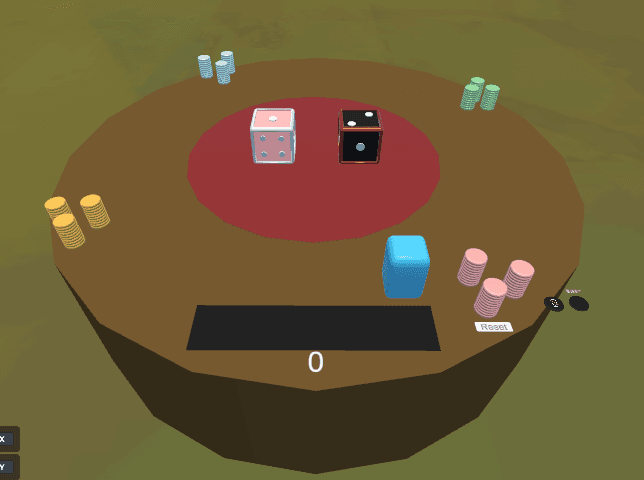
"Pibs" are Manitaire's main currency and they can be grabbed individually or as a stack, which I was able to achieve by making a reparenting system.
Stacks are treated as single objects to maintain network synchronization, and hold the combined pibs value.
Players are able to split their stacks where they choose, making it easier to bet.
And because we love throwing stuff to our friends in VR, they get reset automatically.
“Pibs” are Manitaire’s main currency and they can be grabbed individually or as a stack, which I was able to achieve by making a reparenting system.
Stacks are treated as single objects to maintain network synchronization, and hold the combined pibs value.
Players are able to split their stacks where they choose, making it easier to bet.
And because we love throwing stuff to our friends in VR, they get reset automatically.
“Pibs” are Manitaire’s main currency and they can be grabbed individually or as a stack, which I was able to achieve by making a reparenting system.
Stacks are treated as single objects to maintain network synchronization, and hold the combined pibs value.
Players are able to split their stacks where they choose, making it easier to bet.
And because we love throwing stuff to our friends in VR, they get reset automatically.

Customization
Customization
Customization
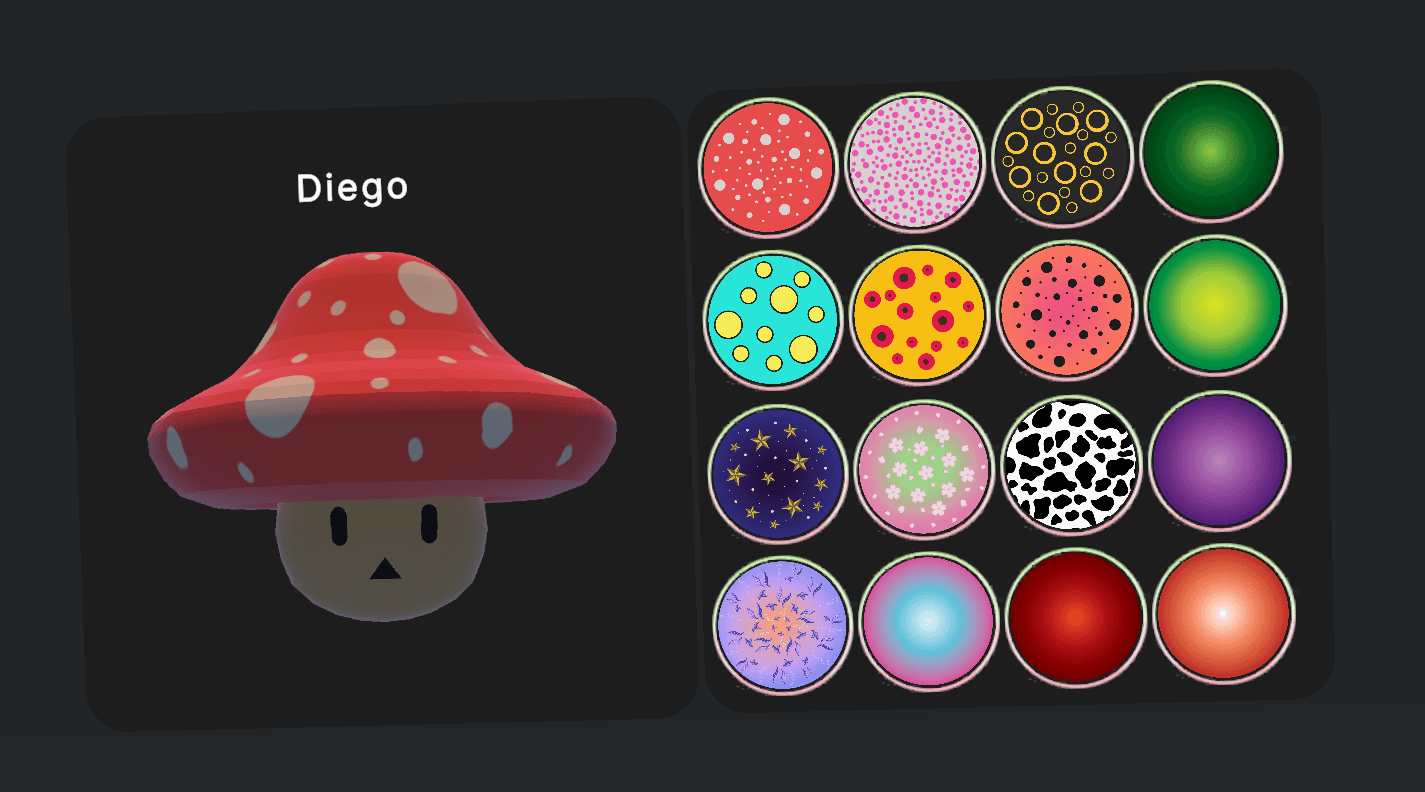
A simple feature but critical to the game's identity. I made a character selection panel where players can change their skin before hosting or joining a table.
Additionally, I modeled the player avatar and made 7 skins to choose from.
My amazing team made an additional 9 skins!
The modular system allows us to customize players' dice as well.
A simple feature but critical to the game’s identity. I made a character selection panel where players can change their skin before hosting or joining a table.
Additionally, I modeled the player avatar and made 7 skins to choose from.
My amazing team made an additional 9 skins!
The modular system allows us to customize players’ dice as well.
A simple feature but critical to the game’s identity. I made a character selection panel where players can change their skin before hosting or joining a table.
Additionally, I modeled the player avatar and made 7 skins to choose from.
My amazing team made an additional 9 skins!
The modular system allows us to customize players’ dice as well.
End Result
End Result
End Result
My Team
My Team
My Team

Ellisha Shin
Ellisha Shin
Ellisha Shin
Art Director
Graphic Design
Environment
Trailer Production
Art Director
Graphic Design
Environment
Trailer Production
Art Director
Graphic Design
Environment
Trailer Production

Alexi Pelekanos
Alexi Pelekanos
Alexi Pelekanos
Concept Artist
Character Artist
Concept Artist
Character Artist
Concept Artist
Character Artist
Progress
Progress
Progress
From early planning to implementation and polish.
These are some of my coding, modeling, and animation contributions of this 30 week project.
From early planning to implementation and polish.
These are some of my coding, modeling, and animation contributions of this 30 week project.